Kompass: a school app for exactly one student
My daughter started class 7 this summer. Her school runs on WebUntis for the timetable and homework and IServ for mail and calendars. Both do their job. Neither is something a twelve-year-old opens because she wants to. So I built her a third app that sits on top of both, and it has one rule that beats every other rule: learning has to be fun.

It's called Kompass. It guides her through the jungle of German school software, which is awful to navigate.
If you read the Kirby migration post, you know how I start now: not with a simple prompt, but with a map of questions, built with the Wayfinder Skill. Twenty-two of them this time. How do we get her timetable out of WebUntis? What does gamification do to a twelve-year-old, and where does it start to hurt? Every answer got written down, including what we threw away. The rejected ideas turned out to be the most useful part.
Then the building. I have never looked at the code, not even once. Kompass is vibecoded top to bottom, with Fable for the map and Opus 5.5 for everything after it, which is a lot of fun right now. The first commit is from a Saturday morning. The machine typed, the map decided.
Today-Dashboard on the left, the morning briefing on the right.
Her morning, in one screen
She opens Kompass and sees her day. Her figure next to one dry line "Donnerstag. Fast schon Freitag.", today’s lessons as coloured tiles, and in orange whatever is different today: Erdkunde cancelled, Werte und Normen in a different classroom. Below that, her mission: homework for tomorrow, today's vocabulary, the bag for tomorrow, already filled in from the timetable and reminding her of fresh sports clothes, if needed. Ticking something off gives a sticker and a few XP. No praise, no pop-up, just the tick.
In the morning the speech bubble asks "Moin! Kurz deinen Tag durchgehen?" and turns into a short story of cards, like Spotify Wrapped or Instagram Stories. In the evening the same bubble packs the bag with her. Notifications only come when she actually has to do something differently, like a cancelled first lesson.
Streak, level and badges on the left, the career shop on the right.
XP for doing, never for grades
She gets XP for doing things but never for grades, and nothing is ever taken away. The streak counts school days, so weekends and sick days don't break it. Every fifth level she picks something from a wish list we wrote together, and it happens outside the app. Streaks and freezes are like Duolingo, but without the annoying bird and definitely without the nasty upselling.
The XP go into a shop, and that was her idea. She doesn't buy hats. She saves up for careers, 86 of them so far, from a couch potato in the basement up to the queen at the top. Every real job shows the salary and how you actually get there. Every figure stands in its own backdrop, which was also her idea. Of course you can set your favourites, so you can find your goal.
Six careers from the shop: blurred and grey until she buys them, in colour in front of their backdrop in the preview.
"Without the chat, the app wouldn't be alive."
The career she saved up for becomes hers. It stands on her home screen, cheers her on during vocabulary, and explains her school topics in small bites and in its own voice. The beekeeper doesn't just explain percentages. She has 40 jars of honey, and sells 25 % of them today and the app draws it on squared paper. Ask her why Iceland has so many volcanoes, and the globe underneath flies to Iceland, shows the two plates pulling apart and puts a real photo of the rift next to the answer. Animated, playful and always just one tap away. Geography can be fun, you know?
That's the part she means: the answers come from the career she saved up for, and they come with a bit of humour. Claude does the explaining underneath, but it never does her homework. It explains the same thing with other numbers, or tells her where her own solution went wrong. It uses metaphors no teacher would come up with, right there in your pocket.
The beekeeper explains volcanoes with a globe, and percentages with her honey jars.
It’s a walkout 🎉
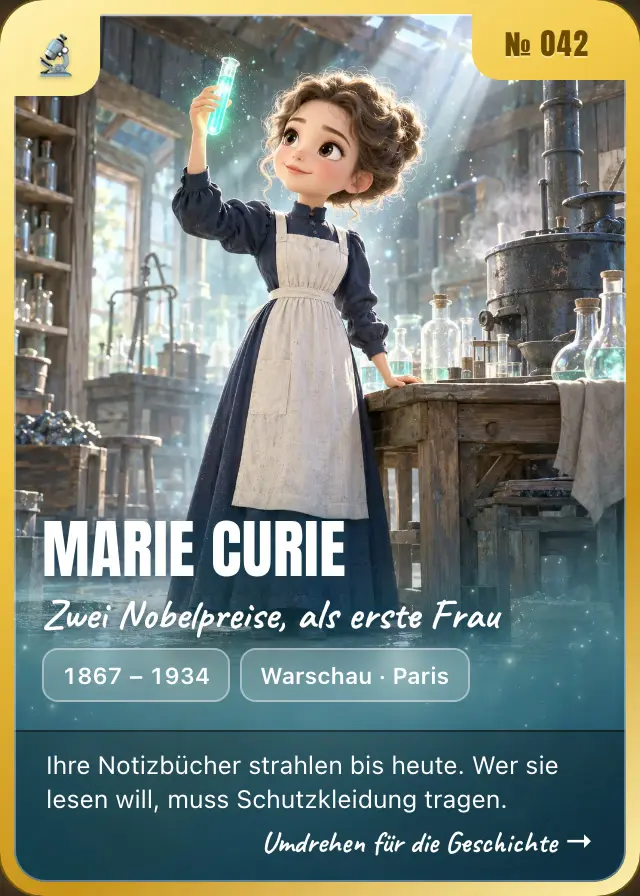
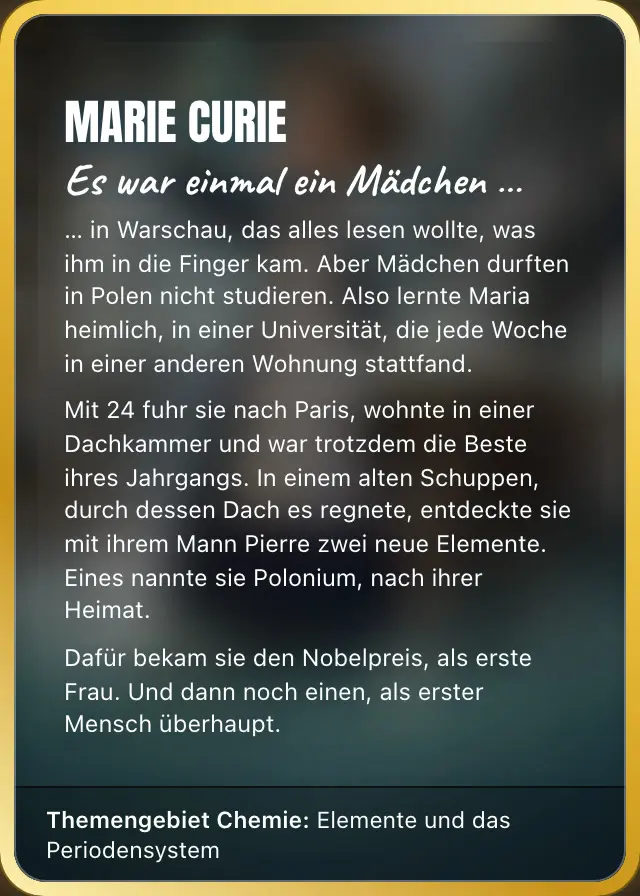
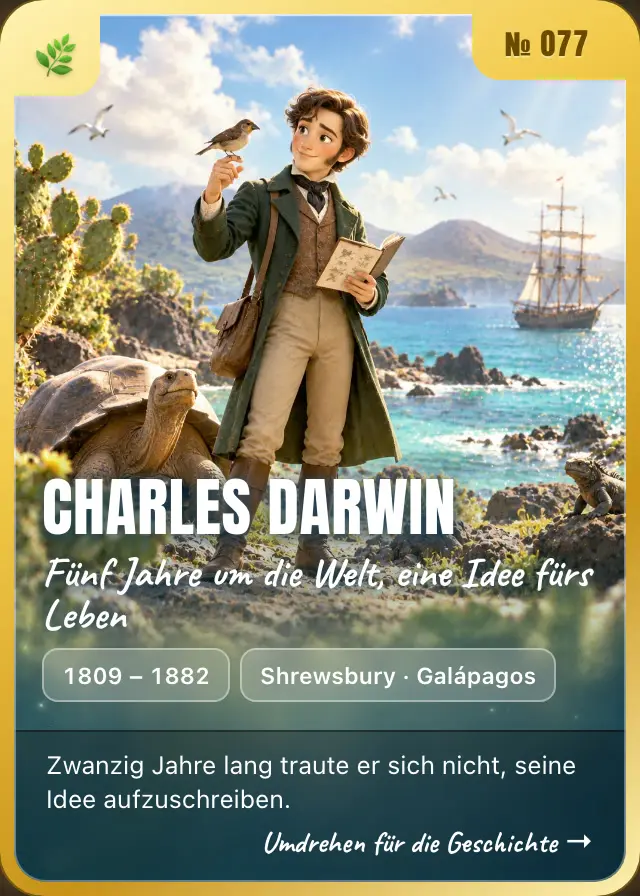
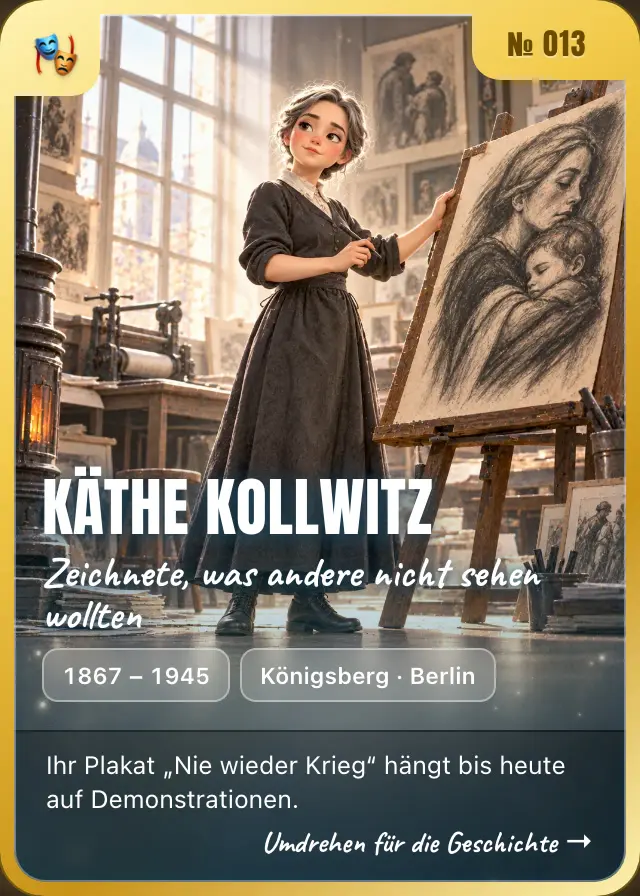
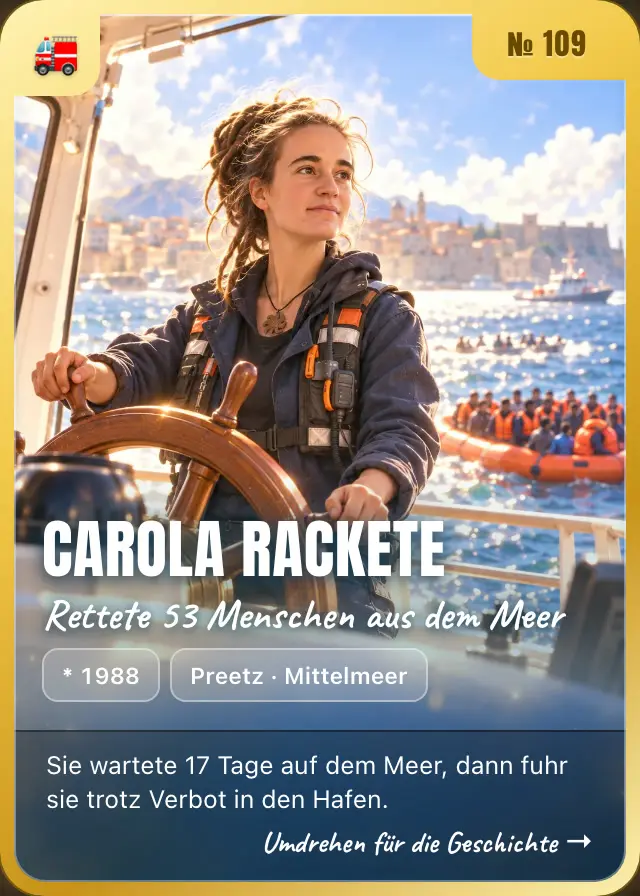
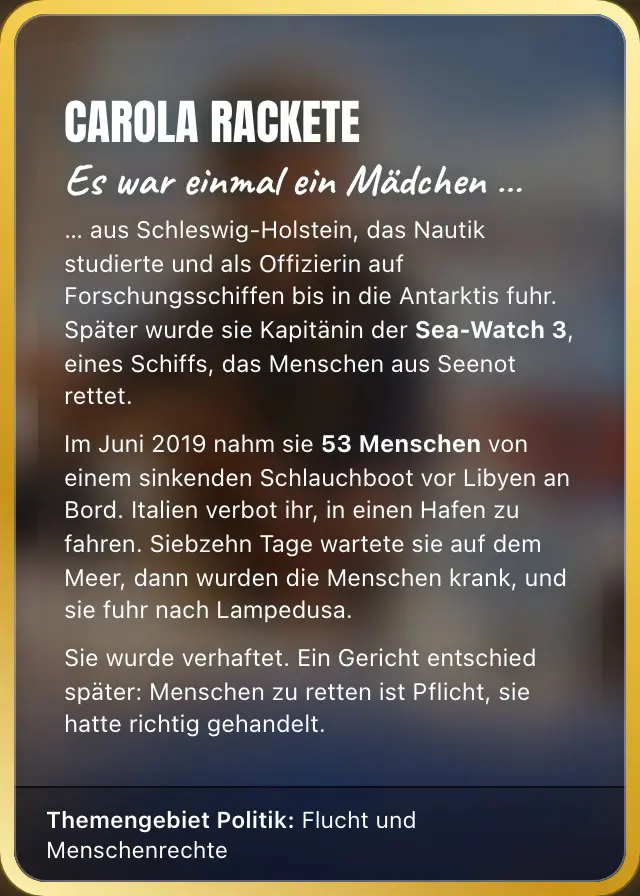
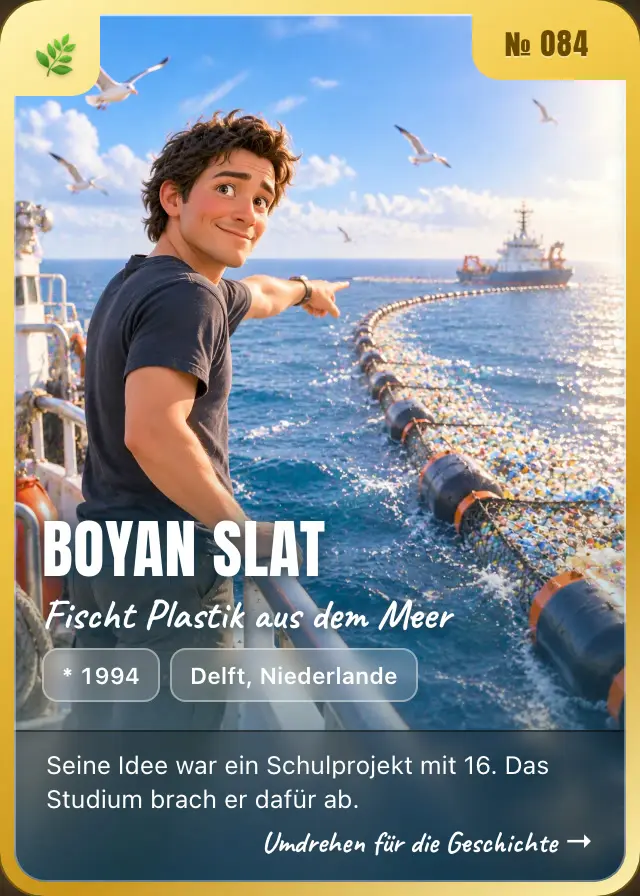
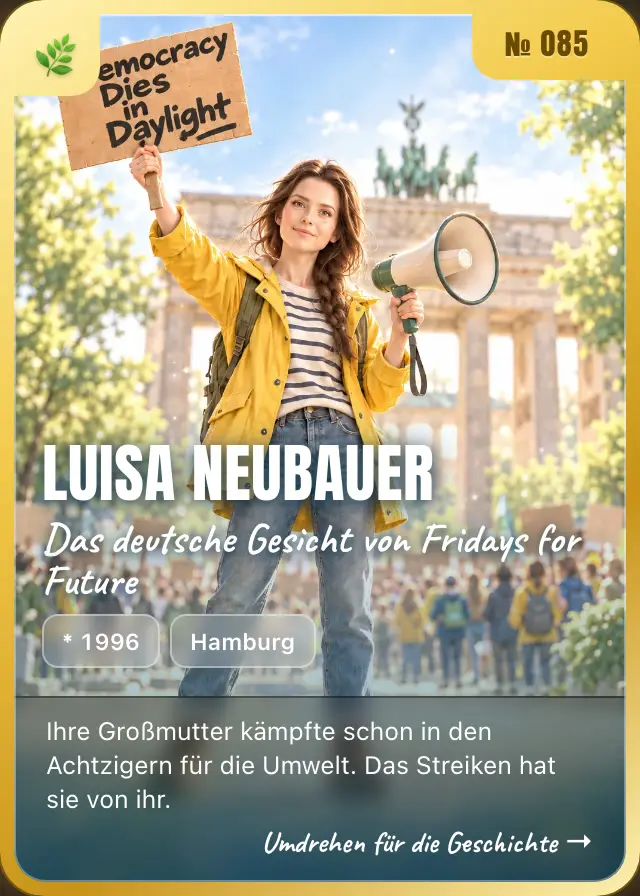
I also wanted Kompass to make history interesting, and not only the kind that is already in the textbook. So there are trading cards: Käthe Kollwitz, Charles Darwin and Marie Curie, right next to Carola Rackete, Boyan Slat and Luisa Neubauer, people who are making history right now. There are a whopping 151 of them so far, with more to come. The front is a storybook illustration. The back tells the story in three short paragraphs, starting with "Es war einmal …", and says in which subject she will meet that person. Inspired by our beloved Good Night Stories for Rebel Girls.
The walnut box with all the cards in it and the equivalent of a "Walkout" animation
The cards live in a walnut box lined with midnight-blue velvet, and it looks nothing like the rest of Kompass. Everywhere else it is stickers, lime green and scribbles. In here it is wood, brass and a serif typeface. That break is on purpose. These people achieved something real, and their cards deserve a little humility and awe, not another sticker.
You can't buy them. You find them while learning, in sealed gold packs: a finished quiz or a vocabulary round can turn one up, and it matches the subject. A biology quiz, and suddenly Darwin is lying there.
There is a 1:12 chance to find one with every finished quiz, every daily vocabulary goal and the first homework of each subject per day. She hasn't found one yet. The dice haven't been kind so far. But it’s also just one day since its release into the app.
The pack wobbles for five full seconds, long enough to get nervous, then tears open and the card slides out with confetti. Until that first find, the legends are a complete secret: nothing in the app mentions them, and the release note only shows a sealed pack. That’s your FIFA Walkout moment, in a learning app.
Vocabulary, and the exams
Vocabulary is a card box with five compartments, the kind she knows from school. The app decides which word comes back when. Five right in a row starts a combo, with confetti and an applauding line from her chosen figure. She adds the vocabulary herself. I saw her snap a page with Gemini and bulk-add her Dutch words. But I also added a base vocabulary with hundreds of English and Dutch words, to look outside of the schoolbooks and put some pressure on the Duolingo bird…
The base vocabulary has 5 stages. It gets harder with time and effort. There's another surprise at the end: once she has worked through all five stages, she unlocks Spanish as a third language. That’s the second I win against that ugly bird.
Exams are fetched from her IServ account, so the app knows about it and tries to pick the right subject from the title the teacher chooses to add. Optionally, she can add topics herself, because the methods of teachers are not as reliable 😬
A vocabulary round with a combo, and an upcoming maths exam with its topics.
Built with her, not just for her
She is not just the user. Throughout the day I get screenshots from her phone: something weird the AI chat said, a vocabulary test that didn't behave. Every new version comes with release notes written for her, with a little animation of what's new. There is a badge in the app called Mitentwicklerin. She has it.
Release notes written for a twelve-year-old, and what a new classmate sees first.
Classmates could join with a code from her phone and get their own progress, but at this point there are some rules and regulations that are preventing me from giving it away to others. WebUntis and especially iServ don’t allow this, ever. Not even the table of contents of her schoolbook may be publicly available, so this stays a private copy… maybe forever.
It's built around one student and one school, and it works today. She loves it… currently. She is twelve, though. Ask me again in March ✌️